PRODUCT DESIGN CASE STUDY
Car-O
Designing a trust-first car care ecosystem across a customer mobile app and an operations dashboard.
Customer mobile app
Dashboard web app
Research-led flow
AI-assisted iteration
My role covered research synthesis, user and customer interviews, problem framing, information architecture, mobile UX, dashboard UX, AI-assisted research and prototype iteration, design-system variables, component states, and handoff thinking.
PRODUCT TYPE
Car care service ecosystem
Customer app for booking, subscriptions, services, accessories, cart, and delivery. Web dashboard for operational control.
PRIMARY USERS
Customers and ops teams
PROJECT CHALLENGE
Make service feel reliable
The product had to reduce uncertainty around daily car cleaning, proof, payments, and service status.
PROCESS ADVANTAGE
AI accelerated the making
AI helped research faster, explore flows, generate variants, build variables, and produce prototype directions quickly.
01 / OVERVIEW
From car-cleaning idea to service operating system.
02 / DISCOVERY AND RESEARCH
The research goal was to understand trust, choice, and operational friction.
CUSTOMER INTERVIEW THEME
Choice is confusing without context.
Users do not only compare prices. They need help deciding by car type, parking situation, exterior/interior frequency, timing, and service reliability.
USER INTERVIEW THEME
Proof matters after booking.
The design problem is not just conversion. Customers need a way to know what was booked, when it is scheduled, and what happens if service quality drops.
OPERATIONS INTERVIEW THEME
Status drives decisions.
Admins need quick views for staged, ongoing, and completed work, plus payment and customer information, so they can act before small issues become support load.
How I moved from inputs to product direction
1
Interview and observe
Collected user and customer needs around plan choice, trust, service timing, payment, and issue resolution.
2
Synthesize patterns
Grouped insights into recurring problems: decision overload, lack of service proof, status ambiguity, and admin follow-up load.
3
Use AI to speed research
Used AI to scan categories, compare flows, generate interview synthesis angles, and explore multiple IA directions quickly.
4
Prototype fast
Converted rough flows into mobile and dashboard prototypes, iterating layout and states faster with AI-assisted design-system work.
03 / PRODUCT STRATEGY
The final design is strongest when read as one ecosystem. The customer app handles selection and confidence. The dashboard handles throughput, exceptions, and operational memory.
01
Make plan choice guided.
The subscription flow uses vehicle, interior cleaning frequency, exterior cleaning frequency, package details, and price to help customers choose without needing sales help.
02
Make service status visible.
Home, services, tracker, calendar, delivery slots, and cart states keep customers oriented before and after purchase.
03
Make admin work scannable.
Dashboard tables, status tabs, payment records, customer details, service management, and item lists create a single operating surface.
04
Use AI where speed matters.
AI helped compress research, generate options, create variables, build design-system primitives, and rapidly produce prototypes for review.
04 / CUSTOMER MOBILE APP
The mobile app turns car care into a guided purchase and management flow.
Key mobile decisions
I used the mobile flow to reduce uncertainty in three places: choosing the right plan, booking a one-time service, and buying related accessories. The app separates subscription, services, accessories, and garage so each mental model has its own route.


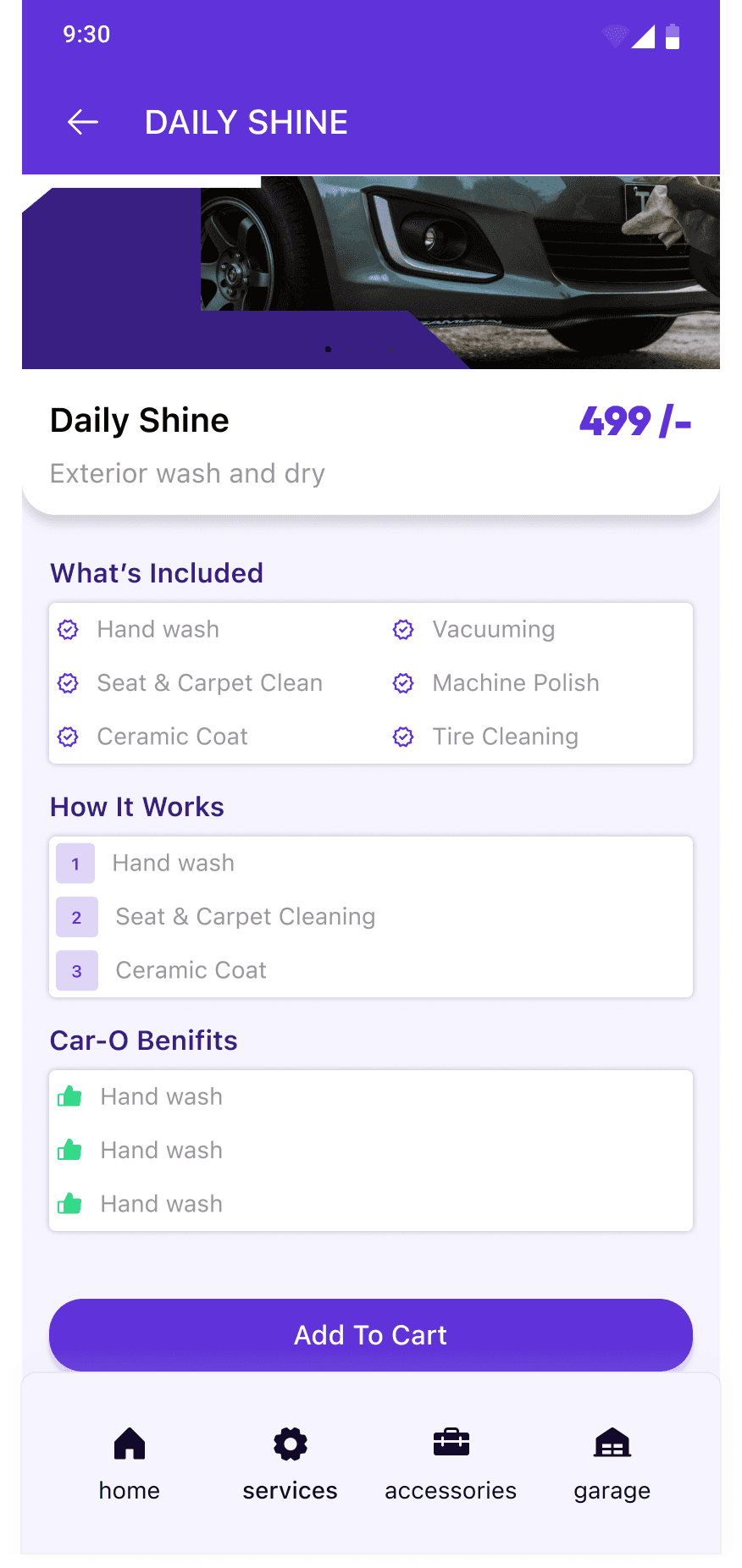

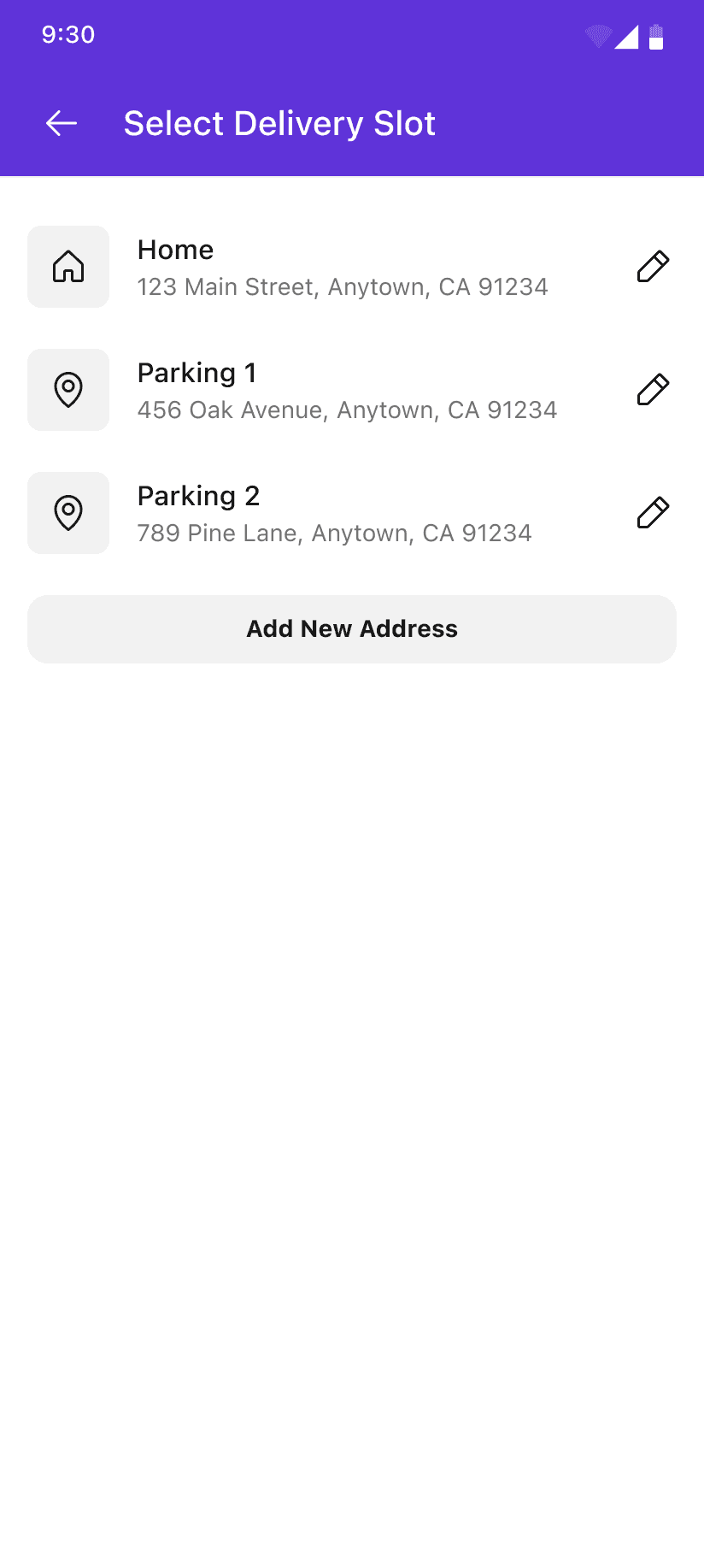
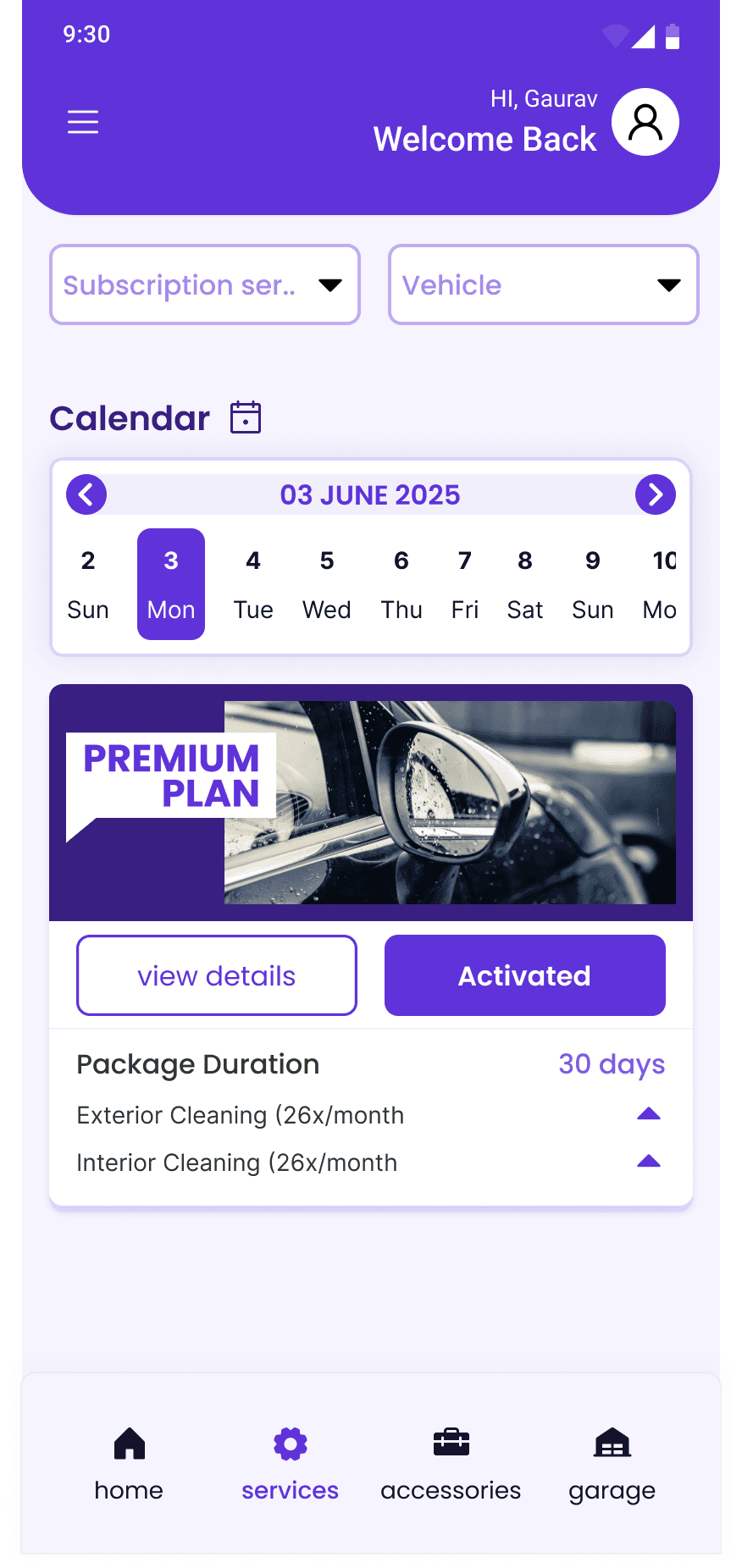
IA split
Home, Services, Accessories, and Garage map to how customers think about the product.
Subscription logic
Vehicle, cleaning frequency, plan cards, package duration, and price create an explainable purchase path.
Post-purchase confidence
Calendar, tracker, selected date, time slots, cart, and delivery address reduce uncertainty after selection.
05 / DASHBOARD WEB APP
The dashboard translates messy service operations into status, records, and control.
Operational surfaces designed for scanning
The dashboard prioritizes table density, status categories, filters, and clear records. It solves a different user problem than the mobile app: admins need to monitor throughput and recover from exceptions quickly.
06 / AI-ASSISTED DESIGN PROCESS
AI helped me move faster without skipping product judgment.
Where AI accelerated the work
I used AI as a production and thinking accelerator: to explore category research, generate interview synthesis directions, pressure-test user flows, create design-system variables, produce component states, and iterate prototypes faster. The final UX decisions still came from the product problem: trust, status, choice, and operational control.
Research acceleration
Prompted AI to scan common car-service patterns, compare flows, and produce questions for user and customer interviews.
Flow iteration
Rapidly explored alternate subscription, service booking, cart, and admin-table structures before choosing the clearest sequence.
Design-system production
Used AI to speed up variables, reusable styles, component states, naming, and consistency checks that normally take significant setup time.
Prototype output
Turned decisions into more polished prototypes faster, allowing more cycles of critique and refinement.

07 / DESIGN SYSTEM AND COMPONENTS
The design system made fast iteration possible.
System work that supported the prototype
The project used a reusable visual language across app and web: purple for primary actions, structured white cards, status colors, rounded input surfaces, table rows, navigation states, and component patterns for repeated screens. AI helped produce foundations quickly, but the system choices had to support real app behavior.
Primary action
Action hover
Trust/assist
Success
Warning
Failure
Ink
Surface line
Component coverage
Navigation
Bottom app bar, dashboard rail, top nav, and section tabs.
Cards
Plan cards, accessory cards, cart cards, customer records, and dashboard panels.
Forms
Search, OTP, date, slot, address, coupon, payment, and add-order inputs.
Tables
Staged, ongoing, completed, customer, payment, and item management tables.
States
Selected, active, pending, completed, payment, inventory, and delivery states.
Handoff logic
Reusable patterns make engineers less dependent on guessing hidden behavior.
08 / FINAL PRODUCT STORY
Two products solving one service problem.
End-to-end outcome
Car-O now reads as a complete ecosystem instead of disconnected screens. The mobile product helps a customer select a model, choose a subscription, book a service, buy accessories, manage address and delivery, and complete checkout. The web product helps the operations team monitor order status, customer records, payments, service definitions, and item workflows.
Skills demonstrated
UX research
Customer interviews
User interviews
Research synthesis
Product strategy
Information architecture
Mobile UX
Dashboard UX
Design systems
AI workflow design
Rapid prototyping
Handoff thinking
What I would validate next